Before You Automate the Worker…Automate the Understanding.
Before You Automate the Worker…
Automate the Understanding.
Everyone wants to automate the process.
Very few want to map it honestly first.
If robotics is going to scale in the real world, the next frontier isn’t better hardware.
It’s better visibility into how humans actually work.
And that starts in three places most automation strategies ignore:
1️⃣ What humans say
2️⃣ What humans do digitally
3️⃣ What humans do physically
Let’s unpack that.
Step 1: Mine the Conversations
Every operation already contains a living knowledge base.
It’s in Slack threads.
In shift handoff notes.
In incident reports.
In text messages between supervisors.
In troubleshooting chats between operators.
Inside those conversations is process intelligence:
“This always jams when…”
“Don’t stack that there after 3PM.”
“If the pallet looks like this, rewrap it.”
“That sensor misfires when it’s dusty.”
This is undocumented workflow logic.
Before you deploy robots, you should be parsing this.
Natural language processing can identify:
• Repeated friction points
• Informal safety rules
• Workarounds
• Edge-case escalation paths
• Tribal knowledge
If you skip this step, your automation strategy starts blind.
Step 2: Map the Digital Workflow
Next layer: digital exhaust.
Where do people click?
What do they override?
What fields do they correct?
What gets delayed?
What gets escalated?
ERP systems, WMS platforms, ticketing systems — they all tell a story.
But most automation efforts only look at output metrics.
The deeper signal is in behavioral patterns:
Manual corrections
Repeated pauses
Exception handling
Timing deviations
This shows you where processes break — not where they succeed.
Robots shouldn’t automate the idealized workflow.
They should automate the real one.
Step 3: Capture the Physical Layer (The One Everyone Avoids)
Here’s where it gets uncomfortable.
Most operational knowledge never touches a keyboard. It lives in body language. In movement.
In physical adjustments that no one documents because they feel obvious.
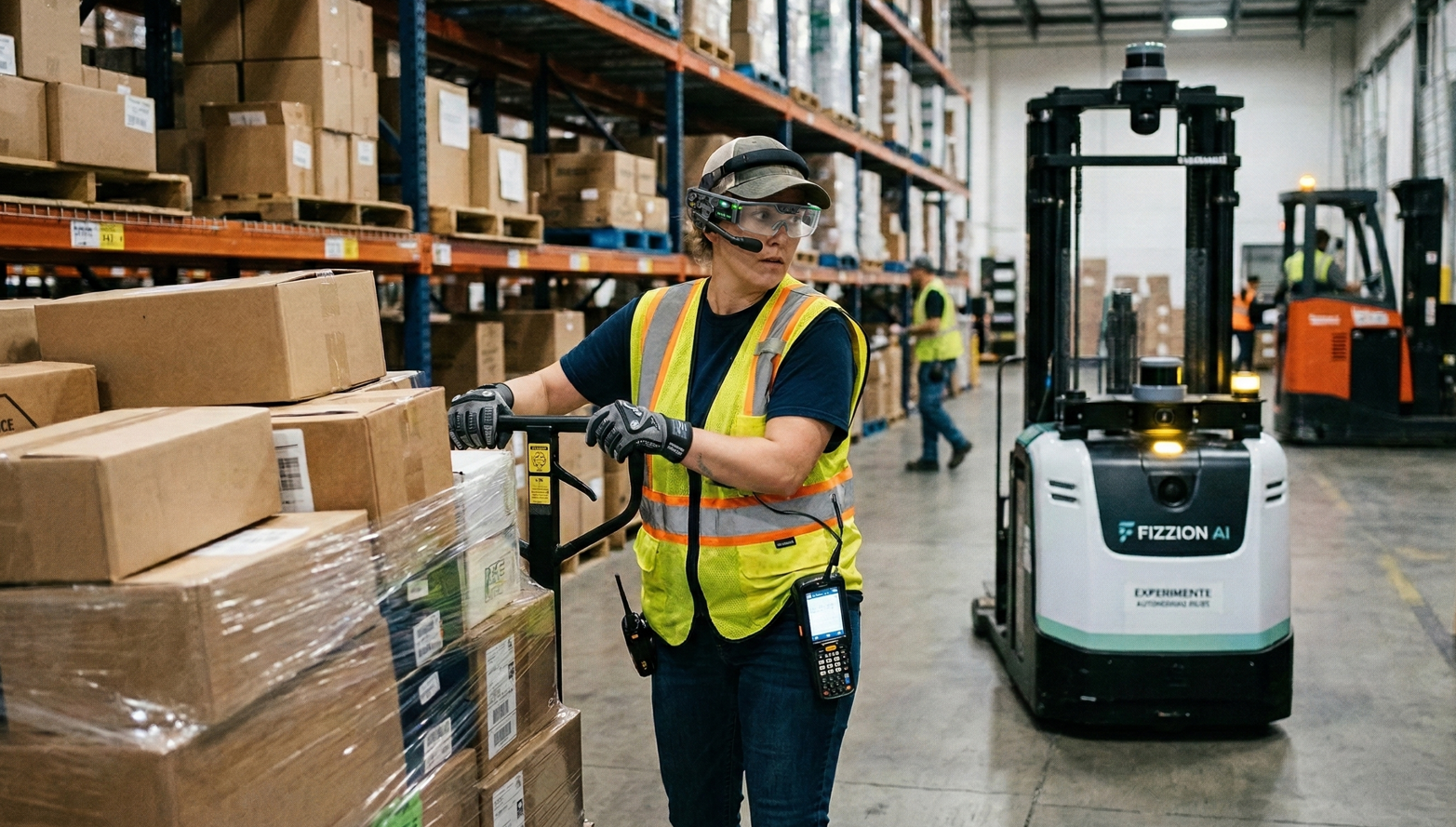
This is where wearable vision changes the equation.
When operators wear forward-facing cameras during normal work:
You see:
• How they approach a load
• Where they hesitate
• What they look at before making a decision
• How they recover from mistakes
• How they adapt to unpredictable obstacles
You capture spatial context that no spreadsheet will ever reveal.
You see the real process — not the one written in the SOP.
This Is the Full Data Loop
Conversation →
Digital behavior →
Physical execution →
When these layers are combined, something powerful happens:
You don’t just automate tasks.
You model expertise.
Text conversations reveal friction and intent.
System logs reveal workflow deviations.
Wearable video reveals embodied decision-making.
That’s the complete picture.
Why This Matters for Robotics
Robots don’t struggle with theory.
They struggle with nuance.
They struggle with:
Slightly damaged objects
Ambiguous scenarios
Informal safety margins
Social spacing in shared environments
“Common sense” adjustments
Those nuances live in the human layer.
If you want robots that operate safely in real environments, you have to train on real human behavior — not sanitized datasets.
The Future of Automation Isn’t Less Human.
It’s More Observant.
The companies that win in robotics won’t be the ones that rush to remove people.
They’ll be the ones who:
Extract intelligence from human conversations
Map real workflows through digital signals
Capture embodied expertise through wearable sensing
That’s how you build systems that scale.
Not by guessing how work happens.
By watching how it actually happens.
The “meat layer” isn’t just infrastructure.
It’s the training ground.
And if we’re serious about automation, the first thing we should automate…
…is understanding.
If you're building in robotics, AI ops, or industrial automation and thinking about how to capture real-world process intelligence at scale — I’d love to compare notes.
Did you enjoy this article?